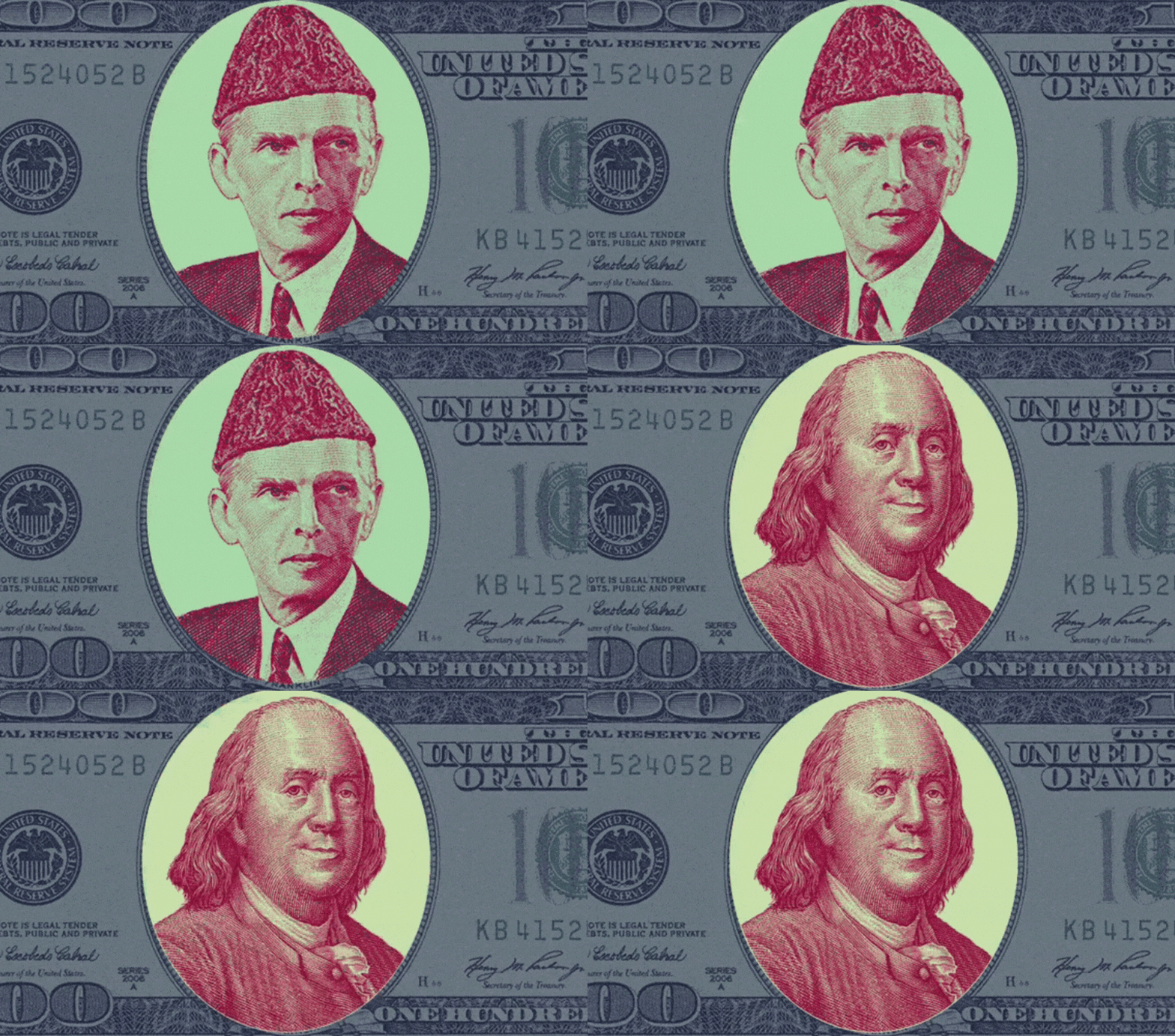

The strength of a currency is often a reflection of a country’s economic health, political stability, and global trust in its financial systems. The Pakistani Rupee (PKR), like many developing countries’ currencies, has faced periods of devaluation and economic pressure. In contrast, the US Dollar (USD) stands strong as the world’s primary reserve currency.
But can the Pakistani Rupee become strong like the Dollar? The short answer: yes—but it requires major reforms and strategic actions. In this blog, we’ll explore what steps Pakistan must take to strengthen the PKR, reduce dependency on foreign aid, and build a more stable and self-reliant economy.

1. Stabilize Political Environment
A stable political climate directly boosts investor confidence and economic certainty. Political instability in Pakistan leads to uncertainty, affecting stock markets, foreign investment, and the value of the PKR.
Step to Take: Establish consistent, transparent governance, reduce corruption, and ensure smooth transitions of power.
2. Increase Exports, Decrease Imports
One of the biggest reasons the PKR depreciates is the high trade deficit—where imports exceed exports. Pakistan heavily imports oil, machinery, and luxury goods, while its export base (textiles, rice, sports goods) remains narrow.
Step to Take: Promote local industries, provide subsidies for exporters, and explore new global markets for Pakistani products.
3. Boost Foreign Direct Investment (FDI)
Foreign investment strengthens the rupee by increasing the inflow of foreign currency. But investors seek security, transparency, and a profitable environment.
Step to Take: Simplify business regulations, offer tax incentives, and build industrial zones with robust infrastructure to attract FDI.

4. Strengthen Domestic Industry
Relying on imports weakens the rupee. To reduce dependency, Pakistan must support local manufacturers and entrepreneurs.
Step to Take: Encourage startups and SMEs, offer loans to small businesses, and improve access to electricity, water, and digital infrastructure.
5. Control Inflation and Manage Monetary Policy
High inflation reduces the purchasing power of the PKR. It also discourages saving and investment.
Step to Take: The State Bank of Pakistan must adopt responsible monetary policies, control excessive printing of money, and ensure inflation stays within a healthy range.

6. Increase Foreign Remittances
Pakistan receives billions of dollars in remittances annually. A stable remittance system brings valuable foreign currency into the economy, strengthening the PKR.
Step to Take: Improve digital banking and legal channels for overseas Pakistanis to send money easily and securely.
7. Build Strong Forex Reserves
A country with high foreign exchange reserves can better defend its currency during global shocks.
Step to Take: Pakistan must reduce reliance on IMF loans and increase dollar reserves through trade surpluses and FDI.
8. Focus on Education and Technology
A strong economy is built on knowledge and innovation. A highly skilled workforce increases productivity, exports, and global competitiveness.
Step to Take: Invest in education, vocational training, and digital literacy. Encourage the IT sector and tech startups.
Final Thoughts
A strong PKR is not just a dream—it is achievable with long-term planning and committed leadership. Countries like China, South Korea, and Malaysia have transformed their economies through bold reforms. Pakistan can do the same.
By focusing on economic growth, export-led development, and currency stability, Pakistan can improve the global standing of its currency and strengthen the Pakistani Rupee like the US Dollar.
Let’s build a stronger, self-reliant Pakistan—rupee by rupee.